Showing posts with label fortress plants. Show all posts

Wednesday, July 5, 2017

Permaculture for Sanity Retention (and Landscape Management)


Kneeling on the lawn, dirty gloves to your face, you see the writing on the garden wall: you now understand the "gardener's trap" you find yourself in - and you find yourself praying to that great tiller in the sky, to just come end it all. Now. Your garden (literally) looks like the heat death of the universe. A manifestation of pure chaos. The apocalypse, but with weeds. 

And grass. 

EVERYWHERE.

I know this is a very geeky metaphor for a gardening blog, but it might seem clever in a moment if you bare with me.

Two years ago, you started your first garden bed. And while the work filled up much of your freetime, it was sooooo worth it: Beauty, cut flowers, fresh food - you were hooked. 

You wanted more. You came up with a plan to convert your whole yard into gardens. Maybe annual flowers. Maybe an annual vegetable patch. Perhaps an English border garden. "Lawn be gone!" you proclaimed. 

But in the second year, as you started working on your new beds, last year's beds still demanded your attention. "That's ok," you thought," this is my hobby." And your expanded gardens expanded into your life, taking up the rest of your freetime. You still had dreams of conquering that lawn, but realized in your heart that you'll never get there. Unless you can coax someone else into helping you. 

I talk to many gardeners who've run up against this wall of time constraints. So many with big plans, but not enough time to implement them - and still keep up the gardens we already have. 

But at least it works. You have enough time to maintain the gardens you've created. You and your garden are a "stable system." 

Until there's a problem. (And there's always a problem.) A particular "weed," or even a beloved plant gets out of control. Ants start farming aphids on your favorite tree. A family of rabbits moves into your vegetable garden. Powdery mildew. Or even just a few weeks of extra rain and cool weather causing the lawn to need more mowing can tip you into the trap. 

And because these problems require additional time to solve, and because you've already run yourself up against your personal time limit, you're now in:

The Gardener's Entropy Trap: Where your gardens takes increasing time and energy to maintain, but you're all out of time and energy. And if your problem gets out of control, there's a real chance it will enter into what's called a "phase shift," like the melting of an ice cube, a move towards chaos that takes a LOT of energy to get it back to the original state of organization (being a garden.)

So there's no time to lose! You need energy!

Seeing the desperate look in your eye, neighborhood children run as you approach. Friends, family and even the significant other are all suddenly VERY busy with work/knitting/darning socks.  

Now, the only viable solution is to dig up all the perennial weeds, till the garden under and start all over again. You give up. Fall down face first into the tangle, and let the minty darkness of the weeds envolope you.... 


You now understand one of the fundamental ideas in Permaculture. Blown up onto the societal level, you can recognize the same "entropy trap" or "complexity trap" in the problems of Urban decay, ever-growing taxes, our declining infrastructure, failing schools, our unstable financial system, a floundering industrial food system....  

Whether you're a ornamental gardener, market gardener, farmer, or homesteader, as we put energy into our landscapes, we all run up against this complexity trap sooner or later. The Energy Law of Gardens: A garden in motion will always  expand to fill your life. 

But it doesn't have to be that way. The primary idea of Permaculture is that there is one force, one source of energy that was available to us all along, and it WANTS to help us, if only we'd have chosen to make a place for it. That force is nature. And the energy it can provide is through what's called "ecosystem services." 


(This naturally-occuring food forest filled with garlic, mustards, medicinal herbs and fruits requires 0 maintenance.)

Here's the Permaculture strategy, in contrast to the complexity trap: When we start a garden, we design a "self-organizing" or self-maintaining system where nature does most of the work. We try to design systems that aren't just low-maintenance, but that can actually free up more time and energy for us! We replace needy lawn with ecosystems! We get that done and stable. THEN we move onto the next project. 


In this way, we can finally conquer the lawn, and transform our yards the way we always wanted to. 

Now, I can't reduce all of Permaculture to one article. But I want to give you the single most important concept to understand HOW we can recruit mother nature (and her services) into our landscapes, farms and gardens. 
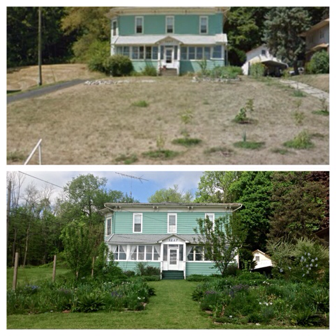


The Intensity Spectrum

In Permaculture, systems that require a lot of energy and time from us humans are called "intensive." This includes things like flower beds, veggie patches, produce fields and native gardens. Those where we let nature do the heavy lifting are called "extensive." These include: naturally occuring ecosystems, stable agriforest systems, mature forest gardens and well-designed guilds. 

Somewhere inbetween these two, there is a spectrum of relatively intensive systems, like edible meadows, intensive forest gardens and guids, hedgerows, slashmulch gardens, annual polycultures, etc. 

The whole point of Permaculture is to balance intensive/extensive systems in a landscape (or city, or business, or organization) so that they better fit our available resources and our goals, minimize maintenance (by relying heavily on extensive, self-organizing systems) and maximize usefulness (by using JUST ENOUGH well-chosen intensive systems.) Period. 


Permaculture Zones

Zones are the most important tool for helping us achieve a good energy balance in the landscape. 


Choose your battles. 

Whether your goal is profit, beauty, or food sovereignty, keep intensive systems small and focussed.


(Clean edges where it counts at Lillie House)

Clean Edges 

Again, one of the most important concepts in Permaculture. We expect clean lines in the garden, even in the market farm. But these take a LOT of energy to maintain. So choose the places where clean edges will have the biggest impact on aesthetics and productivity. 


(Edible border garden with "clean edge".)

Soft Edges. 

Elsewhere, we can use "soft edges" with fortress plantings and pioneer plant communities to maintain the edges for us. 
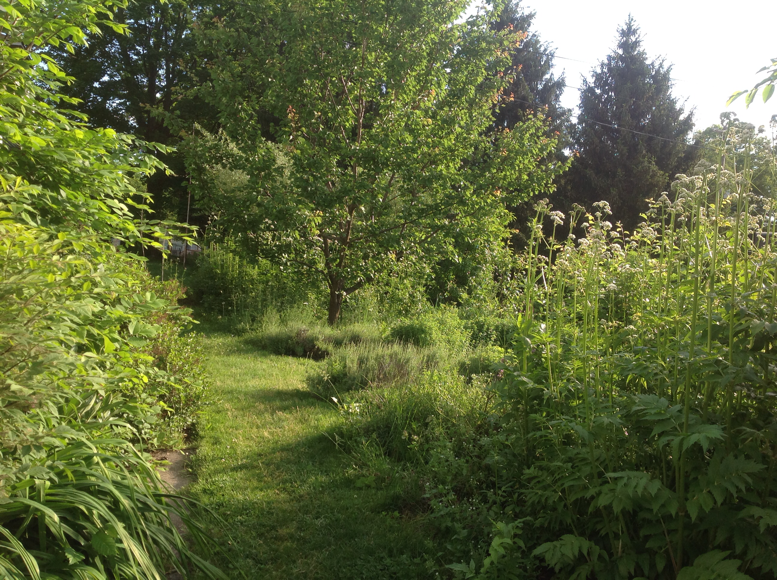

(Soft edges at Lillie House.)


Post Wild Aesthetics

Even in the ornamental landscape, we can blend Intensive and Extensive. Having tidy Intensive gardens where it counts to make a visual statement, and using "Wild" aesthetics to lower our maintenance elsewhere. This ain't a Permaculture idea though, this was once a  major concept in horticulture, now mostly forgotten. 
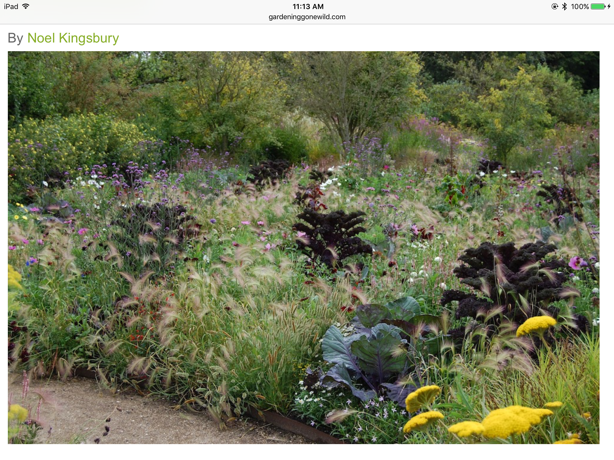

(The "wild" potager at Cambo is famous as an ornamental food garden.) 
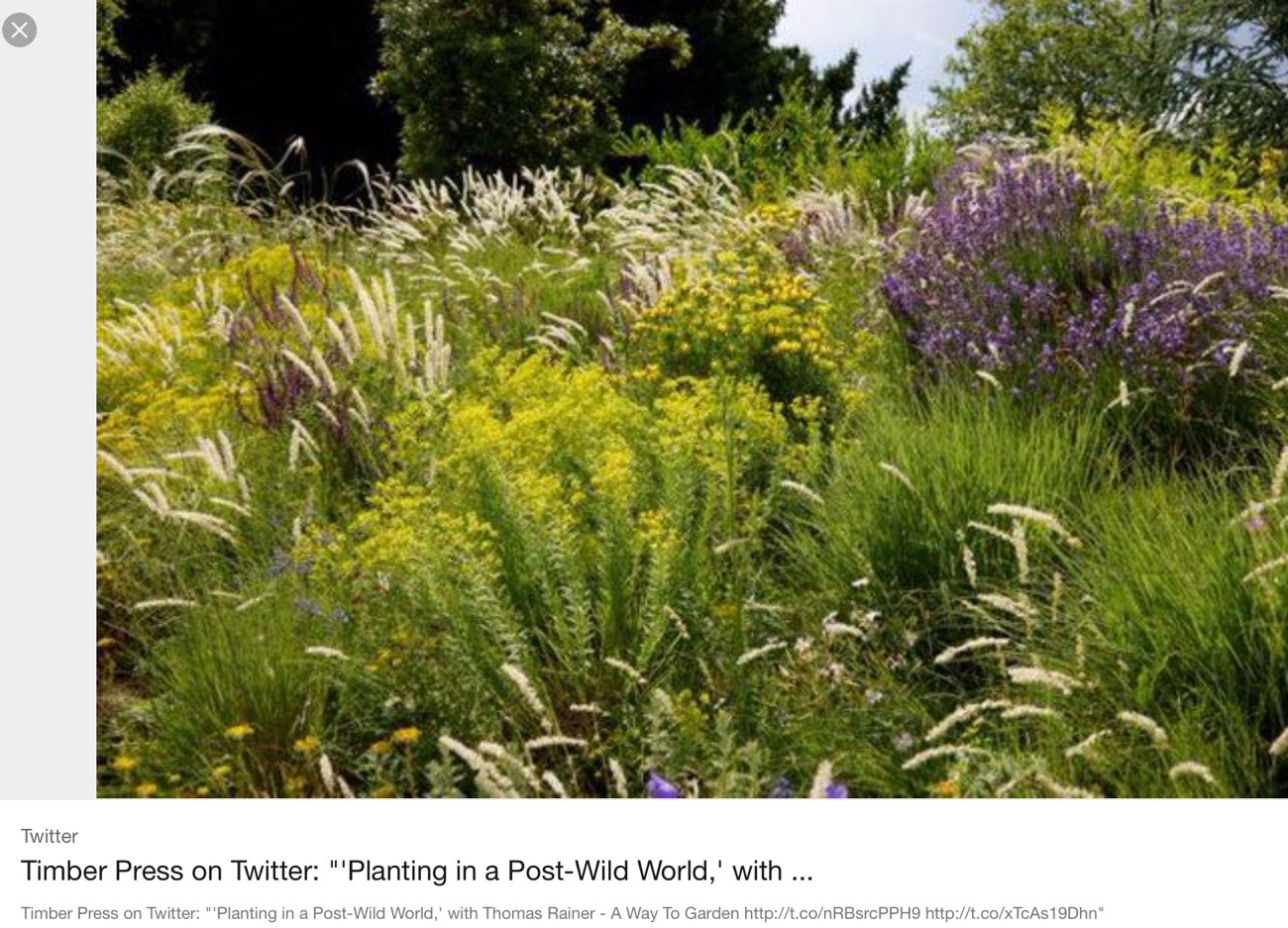

(A "Post Wild" landscape design.) 


(An edible cottage garden associated with the PFAF project.)

Defeating Entropy

UIKeyInputDownArrow
Armed with Permaculture, and with nature as an ally, you're ready to take on the lawn, once and for all. Working with nature, a little at a time, creating stable communities and plantings as we go, we shall garden the world.

ALSO SEE:
The Beginner's Permaculture Garden Bed Make-over
Fortress Plants 


Friday, April 21, 2017

This Hack Get's Mother Nature to Fight Weeds for You: Fortress Plants


Look: this is a picture of a vegetable at war with the lawn. 

Given all the attention around the "food not lawns" movement, you might think I'm being metaphorical. But an experienced gardener will understand that the veggie patch is ALWAYS fighting a war for survival against lawn and "quack grass" greedily trying to take over any bit of land it can get access to. 

"I've lost my garden completely to quack grass!!!"is one of the most common tales of garden woe, and usually the only recourse is to completely start over. 

But LOOK AGAIN: Here, it is the grass that's on the run! This spunky veg, with no help from the gardener, is actually winning the war. More importantly, this hardy specimen is holding the line, protecting the more easily overrun vegetables behind it. This is what some Permaculturists call a "fortress plant." Best of all, it's perennial vegetable, sorrel, meaning that once it is established it will come back each year, working to keep weeds out of the garden for years to come. This is one of several tools derived from the study of ecology and natural succession that clever gardeners can use to keep grasses and other weeds at bay. But you can't just plant sorrel in your garden and expect not to have any weeds. To work well, we need to understand and apply the ecological principle behind how it works and design with that in mind. 

 
(Another combo of fortress plants that has the grass on the run.)

It wasn't hard to convince myself that pouring a glass of home-grown elderberry-wine sangria and plopping a couple ice cubes in it would be the only possible way to visualize this. Now, staring at that ice cube it's still hard for me to imagine a wall of ice a mile high. But 10,000 years ago, that's what we had right here in parts of Michigan. In fact, as recently as 9,000 years ago most - if not all- of Michigan was under ice. When the ice melted and the water cleared what was left was a blank slate, in ecological terms a "disturbance," ready for mother nature to go to work repairing. 

But she couldn't just jump in with the ramps, morels and and solomon's seal that characterize mature woodlands, because they need the rich, deep fungal duff found in the mature forests of Michigan. She had to start with plants that could get a toehold into this "blank slate, with little organic matter or fertility to help out. This gradual process of transformation that occurs after disturbance is called "succession," and that's what we're interested in when it comes to weeds. 

Depending on the soil, the ecological history of the site, and other factors, a typical process of succession starts with the small, quick plants that evolved to cover poor "new" soils with little organic matter or easily digestible nutrition, like mosses and lichens. As these die back they enrich the soil with carbon and other nutrients, essentially adding "compost" to the soil and making it accessible to an increasing diversity of organisms. After a while of this composting, grasses and other "pioneer" weeds come in covering the land and playing their role in repairing the disturbance, creating a grassland. Over time, broadleaf plants like dandelions outcompete the grasses, making room for woody perennials to move in, creating a shrub field, then a savannah, then an open woodland, and finally coming to "climax" at a dark, dense mature forest. 

 
(A forest edge imitates this process, gradually advancing on the grassland.)

So, to nature, "weeds" grasses, and even non-native grasses have a role in ecosystems and a place in the process of ecological succession. In a natural system, their time is fleeting, doing their job, then slowly phasing out of dominance, eventually becoming rare in landscapes they had once dominated as they are replaced by the species that evolved to succeed them. This is why there are rarely many grasses or dandelions in a mature forest, and when they're present they are in balance, not dominating the other plants. 


But in a conventional garden we're constantly setting the ecological clock back every time we till or weed the garden, recreating the "disturbance" that is the promised land of the very grasses and pioneer "weeds" we're trying to get rid of! This is a system designed to fail!

From a Permaculture approach, a better way to keep grasses and other "weeds" from taking over the garden is imitate the process of succession. Author Toby Hemenway called this "fast forwarding to a later stage of succession" beyond the stage where these "weeds" necessarily reign. 

As it turns out, this "mid-succession" state, where grasses and early pioneers have started to naturally cede territory to a greater diversity of herbaceous plants, woody shrubs and early pioneer trees, is the ideal natural habitat for most of our favorite food plants. The soil is rich with organic matter and fertility. A variety of sun-shade habitats provides niches for many plants. Most (but not all) of our veggies can easily find a home in such an ecosystem, and most of our fruit trees are mid pioneers, happiest in such a situation. In nature, this situation is found at the forest edge, where the forest is spreading out converting grassland, and in old-fields and savannah systems. 

This is one reason why a well-designed forest garden works so well: it creates a variety of habitats all hovering somewhere around this mid-succession sweet spot. 

 
(An agro-ecosystem that imitates the mid-succession sweet spot.)

And Fortress Plants are just one great hack that food and ornamental gardeners alike can use to tap into this process. 

 The term "Fortress Plant" is not an ecological term, but rather a handy catch phrase for the various mid-succession pioneers that are adapted to reach out into grassland and begin converting it to forest, through competition, shade and allelopathy (chemicals secreted by one plant to poison its competition.)

So one fortress specimen alone will almost certainly be overrun. But if we can plant these perennial pioneers together with enough density to mimic the spreading pattern of succession, we have a chance at making a garden that is fairly resistant to grass and weed pressures, yet provides ideal habitat to our favorite fruits and veggies. 

 
(An edible hedgerow on the march, converting grassland just like a natural forest edge.)

A final caveat is that different soils require different fortress plant communities, so this strategy takes some experimentation. My recommendation is to use high diversity and high density, giving nature the tools she needs to solve the problem on the soils at hand. 

Starter List of Recommended Potential Fortress Plants

Relatively Low Herbaceous Perennials Idea for the Garden Edges
Most woody perennial herbs, depending on soil (better on sandy soil.)
comfrey, pretty much everywhere
sorrel and blood-veined sorrel
turkish rocket
cardoon
most spring ephemeral bulbs including daffodils and alliums (though the effect is stronger at greater densities and with other plants)
over-wintering annual ephemerals like chickweed, dead-nettle, wild mustards and wild cresses
the monardas
fennel (again, this is probably a weeker effect on most sites, but it has good research proving its allelopathic influence.)

Taller Fortress Plants Often Observed at the Edges of a Forest
pokeweed
sunchokes
Maximillian sunflower
lovage
cane fruit

And this is just one of many tools that gardeners and farmers can use to put the process of ecological succession to work for them. The strategy gets even better when combined with other succession-mimicking hacks, like "nurse logs," another research-based approach to fast-forwarding succession. At Lillie House, these three factors are often seen working together. 

To get a fuller understanding of what these ecological mechanisms are and how they can easily be applied in the garden, we hope you'll join us for this year's Complete Forest Gardening Course, where you can see how these patterns are applied and managed over the course of a growing season, here at lillie House.