Showing posts with label edible landscaping. Show all posts

Thursday, December 14, 2017

We Deserve Beauty: Finding Inspiration in Patterns


“When you put beauty in a place that has none, that's a game changer.” 
— Ron Finley  

To live in a beautiful, uplifted situation with dignity should not be seen as an exclusive privilege for the elite. It is the birthright of every being born to this earth. The idea that rest of us should content ourselves with stodgy utilitarianism is oppressive. We all deserve beauty. 

To surround oneself with beauty is old, powerful magic. It's no wonder it was seen as so revolutionary, so dangerous for Ron Finley to create a beautiful food forest garden in his poor LA neighborhood. 

Look! The elk in the wood carries itself with pride, dignity, its chest uplifted, its head and shoulders like a king, its every movement, its very presence is an incantation: 

“I AM HERE!” 

When we dare to create a beautiful, uplifted environment for ourselves, it allows us to be in the moment boldly, rather than shrink to some sense of shame or inferiority, or worse, an aspirational fantasy of salvation - some savior, the lottery, that promotion, the dream-job, the business breakthrough, the revolution - which may never come. 

Instead, we can each make our worlds beautiful and our lives rich. This does not require money. It’s the ultimate taboo of our age, the truth almost everyone wants to hide from you, but you have more power over the way you will experience your daily life than anyone else on this planet does. 

The world we want to see starts with us.

 Looking for “patterns” and models to replicate and adapt is both a good tool for improving function as well as creating beauty. This “pattern language” paradigm makes beauty and good design available to anyone, not just those who can afford designers. (See “A Pattern Language” by Christopher Alexander.) 

Whenever I approach the teamwork of design, and design is ALWAYS teamwork, I begin by finding patterns that fit the landscape, the architecture, the history, ecology and community character of the space. Each space will be different. What is the "genius of the place" trying to say? How can I help it be heard, rather than stifle its voice under my own song? 

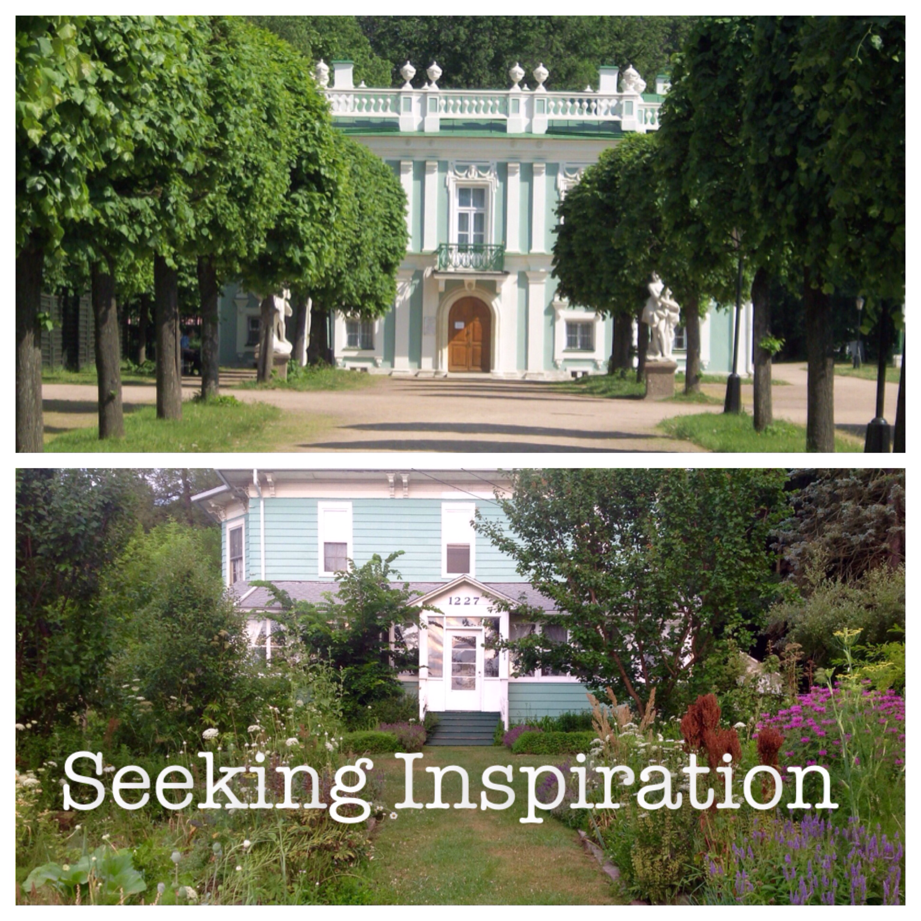
These images show just a few of the patterns that inspired our design. The first is the famous “Italian House” at Kuskova. We wanted to invoke this “allee” of trees and hedges framing the entry like a visual mandala setting the mind to a state of focus and attention - visual dharma. And the model was appropriate to the Itaianate design of our home, our climate, our neighborhood and our goal of promoting sustainable living through beauty. 


The next is the model of the Jardin de Cure, a historic form of food forest garden. These were beautiful spaces for growing fruit, vegetables, cut flowers, and medicinal herbs while creating a healing, rejuvinating space. 


These walking paths along fruiting hedges, with herbs were a natural pattern we could include in our design. 


The third example is Highgrove Manor, also somewhat inspired by the jardin de cure. Prince Charles' gardens at highgrove are a model for organic gardening applied to the beauty garden. Most of us do not have the space or resources to have a garden purely for pleasure, we have to integrate herbs, food, and social space into one landscape. But we can still find inspiration in places that work to make people feel GOOD. 


Here we see those Jardin de Cure colors in our gardens, with an edible meadow inspired by Highgrove in the background. 


More Highgrove colors at Lillie House. 


And finally, the most important, inspiring and beautiful pattern we looked to was the "home garden" pattern found throughout the world in indigenous societies. It is the pattern of a just and sustainable society, and one known for its beautiful, life-enhancing environment. 


Wednesday, July 12, 2017

The Era of Edible Forest Gardening has Arrived


(Edible Forest Garden at Lillie House, filled with food, flowers and medicinal and culinary herbs.)

Nature is calling us home, and people all over the world feel it, the urge to reconnect with their landscapes in a more meaningful way than the endless struggle against lawn and weeds. And the forest garden - a designed ecosystem filled with ripe fruits, lush vegetables, craft materials and medicine that integrates native plants and wildlife habitat - is the ideal representation of our rightful human relationship with the world, cultivating the wild, working with ecosystems to meet our needs instead of reaping them for profit or spraying them with poisons: nurturing all the beings around us while rewarding ourselves and our families.


Building on the improvements of the "native plants movement," the "wild" landscaping, and then post-wild landscaping paradigms, permaculture-designed forest gardening not only preserves and increases biodiversity, but it also maximizes the potential to create habitat for pressured wildlife, catches, cleans  and infiltrates water, dramatically reduces (if not eliminates) our dependence on finite petrochemicals, and sequesters more carbon! Most importantly, it reduces our negative ecological, climate and social impact by helping us grow some of our own food, in the easiest way possible. Moreover, scientists tell us we need to maximize forests if we want to reduce the impacts of climate change. And so the "food forest" has arrived as the new model for the ideal eco-friendly, conscientious landscape design.


(London Glades forest garden, which won top honors for future-friendly gardening at the prestigious Hampton Court Flower Show.)

Forest gardening is now widely being called "the oldest human landuse" by academics across many disciplines, with traditional systems across Europe being recognized as important elements of national culture and heritage. But while the western world had largely forgotten these systems, Indigenous communities around the world, especially in the tropics, have kept these systems alive as vital lifelines and important resources. In fact, modern researchers are documenting how these systems allow human societies to harvest the energy of "ecosystem services" in ways that decrease poverty, lessen oppression, mitigate the human impact on wildlife and biodiversity, provide community resilience and autonomy, reduce work hours, and enhance public health (McConnel, Goutum, United Nations, etc.). It was these systems that inspired the first modern Western forest gardens, especially that of Robert Hart. 


Slowly at first, starting with the earliest visitors to Robert Hart's forest garden in Shropshire, this most modern/most ancient form of landscape captured people's imaginations: to live surrounded by a landscape of bountiful food, regulated by natural ecosystem services. And then they began to spread like wildfire, with models springing up in cities throughout the western world. 


(The famous Pensioner's Garden at the Chelsea Flower Show, top honors, modelled after a traditional English form of forest garden.)

Their influence began to be felt in the world of high landscape design as post-wild, naturalistic landscapers began including more edibles into their work, creating little edible ecosystems that were - in a sense - already forest gardens. 

(Food, medicine, comfort, nature...) 


Quickly, the idiom became a dominant force in aesthetic garden design with the famous Pensioner's garden at the Chelsea flower show. This now-famous garden, modelled after the traditional "cottage garden" cultural icon - recognized as a form of forest garden integrating food, flowers, teas, medicines together in a half-wild natruralistic planting - stoked the fires of the public imagination world wide.


 (Kate Frey, ornamental agro-ecology with fruits like polarded grapes, vegetables, herbs, and flowers.)

The forest gardens kept coming as designers like Kate Frey also took top honors the Chelsea Flower Show, perhaps the world's most prestigious garden competition, with a naturalistic ecosystem of edible plants, wild medicines, and wildlife habitat in a low-maintenance assembly that has been described as an unofficial forest garden. The edible ecological gardens she's gone on to design have been excellent models for what post-wild edible landscaping could achieve in terms of beauty and comfort. 


(London Glades, photo via the Telegraph)

And now, the London Glades, an official forest garden, designed with the Permaculture system, has won a gold medal at the Hampton Court Palace flower show, another of the world's most prestigous competitions! And, at first glance, they nailed it! This is a beautiful example of the form. Of course, there's more to a forest garden than beauty, and I would need to look over goals, production objectives, required inputs, desired uses, plant selections and so on, to really know if this is a great forest garden. But, since forest gardens are really about meeting specific needs, and I beleive the primary objective  here was beauty, then I think this is a wonderful example. To find out more, view plans and see some mock-ups, visit: http://www.crowdfunder.co.uk/london-glades. 


(London Glades, Telegraph.)

The time of forest gardens as an aesthetic medium has come, for any community-minded, conscientous people who want to reconnect with nature while doing one of the single most important things they can do to reduce their negative climate, ecological and social impact. In a world where political solutions seem hard-won and often ephemeral, this is a source of hope, a form of direct cultural transformation we can take action on right outside our door, at our place of work, at an empty lot or bike-trail near our homes....


(Aesthetic home forest garden at Lillie House.)

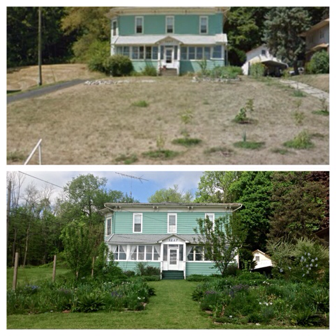
And  finally, a small community of aesthetic-minded gardeners have been working to refine the aesthetics, functionality and comfort of these gardens to move them beyond mere low-maintenance food gardens, but to make models for truly attractive, viable gardens for the home, business or public landscape. Indeed, at Lillie House, we take pride in matching forest garden designs to the architecture, community character and "genii loci" of each place, such as our front yard Jardin de Cure  modelled after a historically-acurate style of garden that was popular when our house was built!   


(Jardin de Cure, another traditional European forest garden with ancient origins.)

If you would like to visit us here and experience a few different models for what a home forest garden can be like, feel free to send us an email at lillie.house.kzoo@gmail.com or connect with us on Facebook. We have an Introduction to Forest Gardening class coming up on Sunday, August 20th, and may schedule another session for a weeknight around that time. 


(Lillie House.)


Wednesday, July 5, 2017

Permaculture for Sanity Retention (and Landscape Management)


Kneeling on the lawn, dirty gloves to your face, you see the writing on the garden wall: you now understand the "gardener's trap" you find yourself in - and you find yourself praying to that great tiller in the sky, to just come end it all. Now. Your garden (literally) looks like the heat death of the universe. A manifestation of pure chaos. The apocalypse, but with weeds. 

And grass. 

EVERYWHERE.

I know this is a very geeky metaphor for a gardening blog, but it might seem clever in a moment if you bare with me.

Two years ago, you started your first garden bed. And while the work filled up much of your freetime, it was sooooo worth it: Beauty, cut flowers, fresh food - you were hooked. 

You wanted more. You came up with a plan to convert your whole yard into gardens. Maybe annual flowers. Maybe an annual vegetable patch. Perhaps an English border garden. "Lawn be gone!" you proclaimed. 

But in the second year, as you started working on your new beds, last year's beds still demanded your attention. "That's ok," you thought," this is my hobby." And your expanded gardens expanded into your life, taking up the rest of your freetime. You still had dreams of conquering that lawn, but realized in your heart that you'll never get there. Unless you can coax someone else into helping you. 

I talk to many gardeners who've run up against this wall of time constraints. So many with big plans, but not enough time to implement them - and still keep up the gardens we already have. 

But at least it works. You have enough time to maintain the gardens you've created. You and your garden are a "stable system." 

Until there's a problem. (And there's always a problem.) A particular "weed," or even a beloved plant gets out of control. Ants start farming aphids on your favorite tree. A family of rabbits moves into your vegetable garden. Powdery mildew. Or even just a few weeks of extra rain and cool weather causing the lawn to need more mowing can tip you into the trap. 

And because these problems require additional time to solve, and because you've already run yourself up against your personal time limit, you're now in:

The Gardener's Entropy Trap: Where your gardens takes increasing time and energy to maintain, but you're all out of time and energy. And if your problem gets out of control, there's a real chance it will enter into what's called a "phase shift," like the melting of an ice cube, a move towards chaos that takes a LOT of energy to get it back to the original state of organization (being a garden.)

So there's no time to lose! You need energy!

Seeing the desperate look in your eye, neighborhood children run as you approach. Friends, family and even the significant other are all suddenly VERY busy with work/knitting/darning socks.  

Now, the only viable solution is to dig up all the perennial weeds, till the garden under and start all over again. You give up. Fall down face first into the tangle, and let the minty darkness of the weeds envolope you.... 


You now understand one of the fundamental ideas in Permaculture. Blown up onto the societal level, you can recognize the same "entropy trap" or "complexity trap" in the problems of Urban decay, ever-growing taxes, our declining infrastructure, failing schools, our unstable financial system, a floundering industrial food system....  

Whether you're a ornamental gardener, market gardener, farmer, or homesteader, as we put energy into our landscapes, we all run up against this complexity trap sooner or later. The Energy Law of Gardens: A garden in motion will always  expand to fill your life. 

But it doesn't have to be that way. The primary idea of Permaculture is that there is one force, one source of energy that was available to us all along, and it WANTS to help us, if only we'd have chosen to make a place for it. That force is nature. And the energy it can provide is through what's called "ecosystem services." 


(This naturally-occuring food forest filled with garlic, mustards, medicinal herbs and fruits requires 0 maintenance.)

Here's the Permaculture strategy, in contrast to the complexity trap: When we start a garden, we design a "self-organizing" or self-maintaining system where nature does most of the work. We try to design systems that aren't just low-maintenance, but that can actually free up more time and energy for us! We replace needy lawn with ecosystems! We get that done and stable. THEN we move onto the next project. 


In this way, we can finally conquer the lawn, and transform our yards the way we always wanted to. 

Now, I can't reduce all of Permaculture to one article. But I want to give you the single most important concept to understand HOW we can recruit mother nature (and her services) into our landscapes, farms and gardens. 


The Intensity Spectrum

In Permaculture, systems that require a lot of energy and time from us humans are called "intensive." This includes things like flower beds, veggie patches, produce fields and native gardens. Those where we let nature do the heavy lifting are called "extensive." These include: naturally occuring ecosystems, stable agriforest systems, mature forest gardens and well-designed guilds. 

Somewhere inbetween these two, there is a spectrum of relatively intensive systems, like edible meadows, intensive forest gardens and guids, hedgerows, slashmulch gardens, annual polycultures, etc. 

The whole point of Permaculture is to balance intensive/extensive systems in a landscape (or city, or business, or organization) so that they better fit our available resources and our goals, minimize maintenance (by relying heavily on extensive, self-organizing systems) and maximize usefulness (by using JUST ENOUGH well-chosen intensive systems.) Period. 


Permaculture Zones

Zones are the most important tool for helping us achieve a good energy balance in the landscape. 


Choose your battles. 

Whether your goal is profit, beauty, or food sovereignty, keep intensive systems small and focussed.


(Clean edges where it counts at Lillie House)

Clean Edges 

Again, one of the most important concepts in Permaculture. We expect clean lines in the garden, even in the market farm. But these take a LOT of energy to maintain. So choose the places where clean edges will have the biggest impact on aesthetics and productivity. 


(Edible border garden with "clean edge".)

Soft Edges. 

Elsewhere, we can use "soft edges" with fortress plantings and pioneer plant communities to maintain the edges for us. 


(Soft edges at Lillie House.)


Post Wild Aesthetics

Even in the ornamental landscape, we can blend Intensive and Extensive. Having tidy Intensive gardens where it counts to make a visual statement, and using "Wild" aesthetics to lower our maintenance elsewhere. This ain't a Permaculture idea though, this was once a  major concept in horticulture, now mostly forgotten. 


(The "wild" potager at Cambo is famous as an ornamental food garden.) 


(A "Post Wild" landscape design.) 


(An edible cottage garden associated with the PFAF project.)

Defeating Entropy

UIKeyInputDownArrow
Armed with Permaculture, and with nature as an ally, you're ready to take on the lawn, once and for all. Working with nature, a little at a time, creating stable communities and plantings as we go, we shall garden the world.

ALSO SEE:
The Beginner's Permaculture Garden Bed Make-over
Fortress Plants 


Sunday, January 3, 2016

Gardeners Gone Post-Wild: Post Wild Edible Landscaping


(HEY! If you're interested in transforming your yard into an edible, ecological paradise, check out our online Introduction to Forest Gardening Course: https://lilliehouse.talentlms.com/catalog/info/id:126)


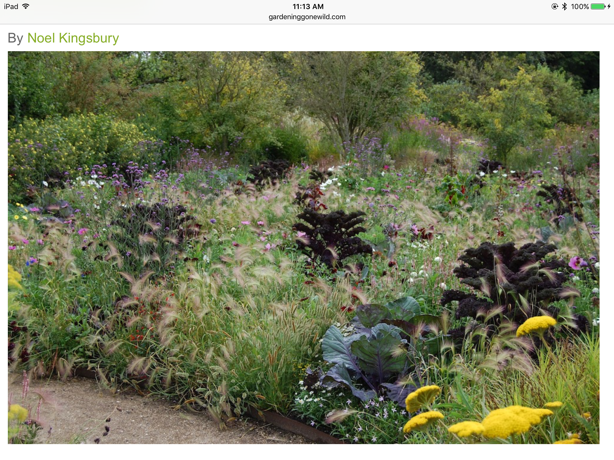
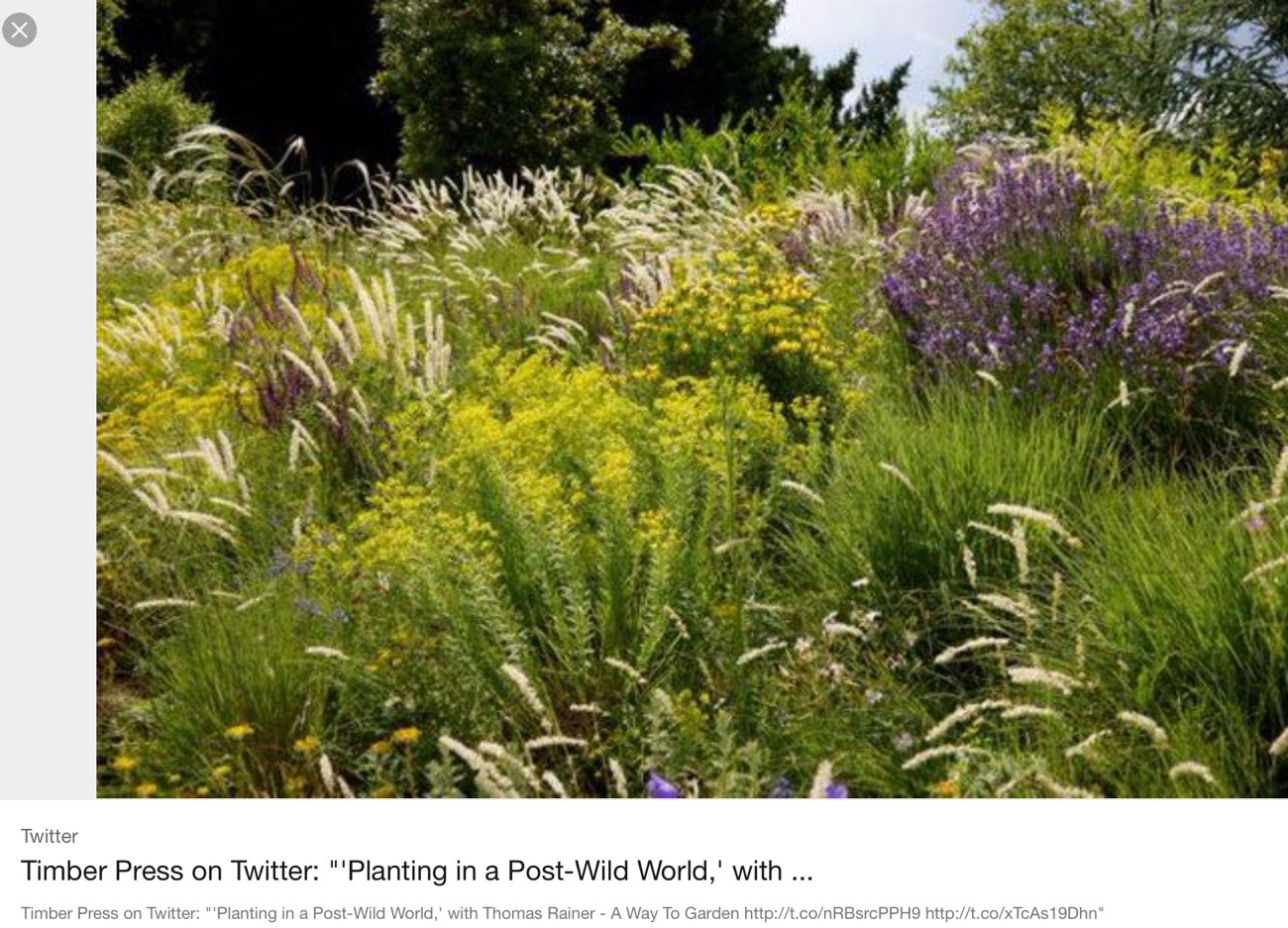
This post is filled with purdy pictures from the book Planting in a Post-Wild World (along with shots from our own gardens) which has been getting as much press in the tea-and-crumpets circles of ornamental gardening as it has in the granola-with-hemp-milk syndicates of Environmentalist do-gooders. You know, hippies like me. Except for the hemp milk bit, because hemp milk is just a horrible, horrible thing. 

*Shudder.*

Even Architectural Digest has jumped on the "post-wild" bandwagon with it's review.


The "post-wild" gardening movement, as covered in beautiful coffee-table books like Planting for a Post-wild World and The Rambunctuous Garden, has gained popularity as both a critique and outgrowth of the "wild" gardening movement of the last century that advocated gardens of native plants. Often these "wild" gardens were planted more in the disciplined monoculture battle formations of botanical gardens than anything you'd ever find in the true "wilds."  

Such gardens of site-appropriate native plants were proposed as being more environmentally friendly, since the native plants would be well-adapted to the conditions, and not need as much watering or fertilizer. And gardens popualted by the local flora and fauna would be more "terroir," more appropriate to the local character. 

Post-wild carries the same thoughts further down the stream by emphasizing naturally tight plantings of ecologically modelled but well-designed plant communities. Post wild plantings copy what you see in lots maintained by mother nature herself, such as this unmanaged "hellstrip" near the author's house:


Permaculturists call these wild assemblages "recombinant ecosystems." You'll notice, this isn't the idealized "untouched nature" of pure native plants that the wild gardening movement dreamt of. Post-wild prioritizes the resource and energy efficiency of truly "wild" plant communities as they pop up in the REAL natural world, "weeds" and all, over the exclusive use of natives. It recognizes that non-natives can play an important role in bringing stability to ecosystems dominated by non-native soil organisms and human use patterns that are inhospitable to native plants. 

The idea is that unlike many native gardens that often require continuous work weeding and spraying to keep out "invasives" and watering and soil amendment to keep plants healthy, nobody does ANYTHING to that there hellstrip and it just keeps on keepin' on, as they say. Due to the diversity, it's extremely resilient. If it's a dry year, something in that tangle will thrive. In a wet year, something else will step up to keep things looking lush and healthy. 


Post-wild plantings also give up the mulch-obession of modern landscaping. 

Because, those orange-dyed wood chips? WTF? 

Mulch once and you'll mulch, mulch, mulch... it never ends. You'll be back mulching year after year. Which isn't always a bad thing, but it takes time, work, and resources. But, ecosystems are SELF-MULCHING and clever gardeners design gardens that do the same! In well-functioning plant communities, the plants look after each other, and do all the gardeners work: watering, weeding, fertilizing, pollinating and mulching. 


And because these plant communities resemble true wild nature, there's a better chance that they will capture that underlying magic, the beauty of nature that stills our breath and quiets the mind. Such plantings have the opportunity to transcend being "gardens." They may become ecosystems. Which isn't just good for the garden, it's something we can see and feel. Healthy ecosystems - that's something we've spent our whole EVOLUTION learning how to spot and everything in our being tells us that's the kind of place where we want to be. 


And there's no reason that post-wild gardens have to be messy post-modern art. Hardscaping can add structure and tidy formality while reducing maintenance, as in the picture above. No mowing or weedwacking is necessary to keep these lines looking crisp and formal. 


Careful use of color can bring amazing beauty, character and variety. Good designers have been painting post-wild landscapes worthy of museum walls. 

And post-wild designers often tie wild plantings together with formal beds and garden layouts, such as we have done in our EDIBLE post-wild front yard Jardin de Cure at Lillie House: 


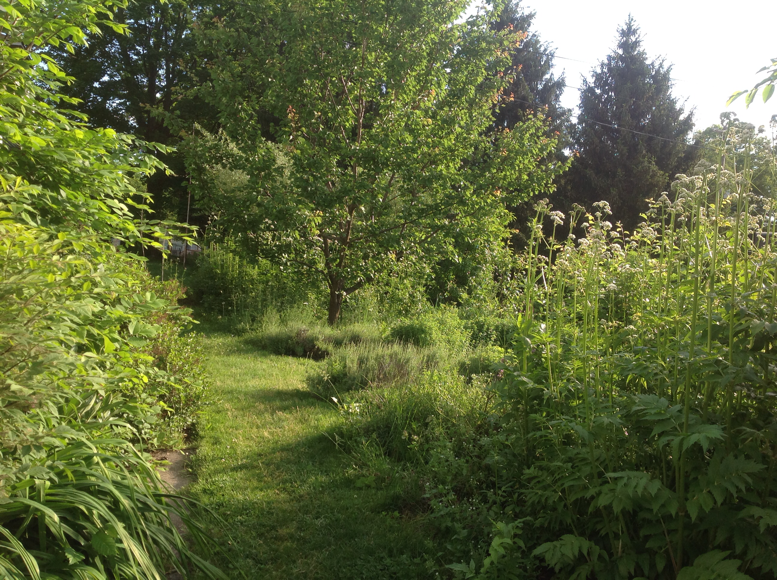
In our gardens, we've used the ideas of guilds and ecological modelling to create edible ornamental plantings that are filled with both flowers and food. That's right! There's no reason why the post-wild aesthetic that's becoming so popular can't be applied to create beautiful EDIBLE landscaping, as we have done at Lillie House: 


Any of these pictures in this post, or the books sited above, could be models for your own home edible garden. And these naturally maintained gardens will take less time and resources than a lawn or flower garden. This is especially true of home Food Forest Gardens, which make ideal post-wild gardens. 


(One of our Food Forest Gardens.)


For those who are interested, the books listed above are loaded with "garden porn" (as it's known on the interwebs) and practical advice, is a good place to start. But in my opinion, some of the best tools for designing great plant communities, whether edible or ornamental, come from the field of Permaculture. The Permaculture concept of "guilds" can be a great tool for analyzing the naturally-occurring ecosystems around your home and designing gardens that work as well. 


(Another post-wild edible garden designed by Lillie House. This one is an ecologically-modelled polyculture.)

Permaculture books like Gaia's Garden have a lot of great information on designing function plant communities. The polyculture work of Ianto and Chris Evans is another good stepping-off point: https://www.permaculture.org.uk/sites/default/files/page/document/MixedVegGarden_A4_colourbooklet.pdf

Many of the same principles used in annual vegetable polycultures can be used and adapted to edible/ornamental landscapes. For example, at Lillie House all of our beds are mixed polycultures of Annuals and Perennials. We use a variation on the "Ianto Evans Polyculture" as a self-sowing ground cover that takes over whenever soil is left bare, and fills in spots after harvests. Because we've chosen our plants carefully, it's as beautiful to look at as it is to eat! 


And if you'd like to get really in-depth instruction on designing such well-functioning, low-maintenance plant communities, that's going to be one of the major topics of our Forest Gardening Course that we'll be offering this summer as part of our Community Supported Forest Gardening program (which we'll be launching very soon!) We'll be working with students to help them analyze and design beautiful gardens that match the aesthetics and architecture of their homes and neighborhoods, while functioning like self-organizing ecosystems. I'm extremely proud of the way the program is set up, so do me a favor by checking it out and letting us know what you think. 


And, while you're day-dreaming about next summer's garden season, here are another couple of resources you can check out for inspiration on post-wild edible gardens:

Our Lillie House Design Portfolio. Lots of pictures of beautiful edible ecosystems!

Our Pintrest board on Traditional Edible Forest Garden systems: These are beautiful human ecosystems that have stood the test of time! 

And, if you like this article, do us a HUGE favor and use those fancy little buttons below to share it on your favorite social media. 


(Forest Garden at Lillie House in Kalamazoo.)